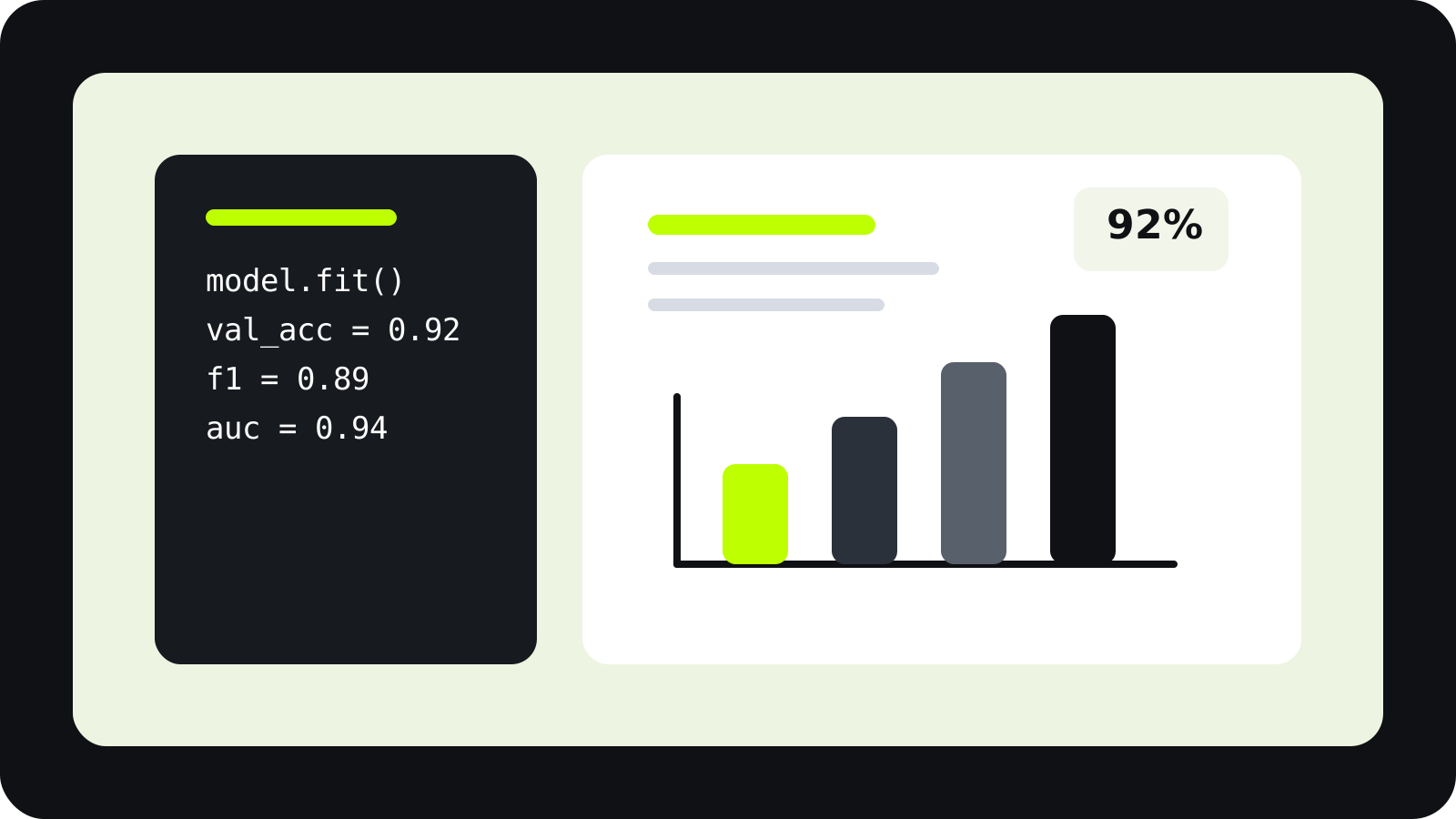
Choose results that answer the research question
Not every metric belongs in the final manuscript. Include the results that support the paper's main claim and decision-making.
- Select comparisons that clarify what improved and why it matters.
- Avoid flooding the paper with low-value result tables.
- Tie each result back to a concrete method or experiment choice.
Make figures and tables interpretive, not decorative
A chart helps only when the reader can understand what to conclude from it.
- Use captions that explain the comparison, not just the plot type.
- Call out trends, trade-offs, or failure points in the text.
- Keep model names, datasets, and metrics consistent across visuals.
Connect the results section back to the methodology
Results are stronger when the reader can immediately understand how the method produced them.
- Reference the exact experiment setup when discussing key findings.
- Explain unexpected results instead of hiding them.
- Use the discussion section to interpret significance, not repeat numbers.